Electricity in Daily Life: Concepts Every Student Should Master
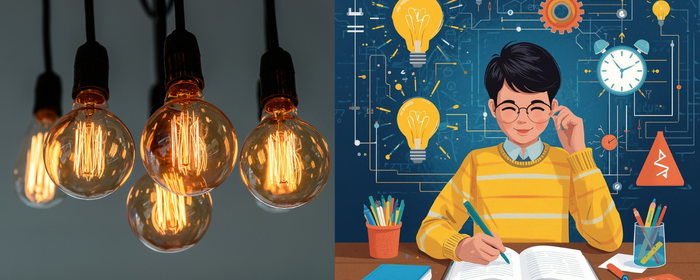
Have you ever wondered why your phone heats up while charging, or why a simple power cut can bring your entire day to a halt? Some things that we take for granted every moment are so indispensable that our lives cannot proceed without them, and electricity is one of them. It is woven so deeply into our lives that we barely notice it, until it’s gone. However, do you know the science (most importantly, the physics) behind it?
Despite being so ubiquitous in our everyday lives, electricity is one concept that still baffles many students across Singapore (and probably the rest of the world). Young learners scramble to connect textbook concepts with real-life applications while they make circuit diagrams, solve numericals related to drift velocity, resistivity or Ohm’s Law and Kirchhoff’s rules. However, with Singapore physics tuition and an ironclad understanding of the basics, things can change, and today, we are going to talk all about it.
Why Is Electricity Important?
Let us tell you, electricity isn’t just about lighting a bulb; it powers everything from your WiFi to hospitals and industries. In fact, global electricity consumption exceeded 31,779 TWh in 2025, underscoring how essential it has become in modern life. (Source)
From charging your laptop to running metro trains, electricity is the invisible force that’s keeping society in motion. However, do you really understand the working principle behind it?
Current and Voltage: The Basics that You Cannot Ignore
If you are having issues visualizing electricity, think of it like water flowing in a pipe:
- Current (I) is the flow of electric charge, and
- Voltage (V) is the pressure that pushes the charge
When you plug in your phone charger, voltage pushes electrons through the wire, which creates current, and that’s what powers your device.
Resistance: Why Wires Heat Up?
Have you ever felt your charger getting warm? Well, that’s due to resistance (R), which is the opposing force to the flow of current.
- Higher resistance means more heat, whereas
- Lower resistance means smoother flow
And this concept is used everywhere from heating appliances (like irons) to energy loss in power lines. Yes, now, it seems easy to visualize, but if you are still having issues with visualizing the current, reaching out to tutors at an O-level physics tuition in Singapore can help you to comprehend things better.
Power and Energy: What Your Electricity Bill Measures
The things on which your electricity bill depends include:
- Power (P): How fast energy is used, and this is measured in watts.
- Energy: This is the total electricity consumed (and it’s measured in kilowatt-hours or kWh)
For example, a 100W bulb running for 10 hours consumes 1 kWh of energy. That’s exactly what your electricity bill tracks.
AC v/s DC: The Current Behind Your Devices
- DC (Direct Current): Flows in one direction (used in batteries, phones)
- AC (Alternating Current): Changes direction (used in homes and industries)
Your home appliances run on AC because it’s easier to transmit over long distances.
Circuits: The Backbone of Every Device
Every electrical device, from a fan to a laptop, works on circuits, like:
- Series circuit: One path (if one component fails, everything stops)
- Parallel circuit: Multiple paths (used in homes for reliability)
This is why one fused bulb doesn’t shut down your entire house.
Conclusion:
Understanding electricity isn’t just about passing exams; it’s about making sense of the world around you. The next time you switch on a light or charge your phone, remember: you’re witnessing physics in action. Master these concepts, and suddenly, electricity won’t feel invisible anymore; it will feel intuitive.
Looking for help from IP physics tuition in Singapore to simplify electricity for you? Reach out to the team at Best Physics Tuition TM today!