The Physics Behind GPS: How Einstein Helps You Navigate
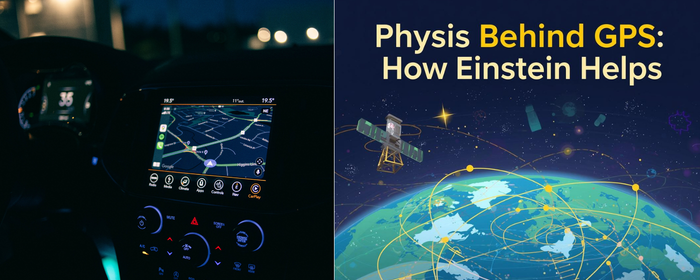
We have all been late to something important or have simply lost our minds when our map on the screen starts “Recalculating…” However, do you know Einstein’s role behind GPS and the maps we use today? The answer to location facilities offered by smartphones isn’t just satellites or smart software; surprisingly, every time we use GPS, we are relying on the genius of Albert Einstein.
Yes, the same scientist who is famous for relativity is quietly helping you find the fastest route to your destination. Wondering how? Well, here’s a guide from the tutors at H2 physics tuition in Singapore to help you understand the facts.
GPS Is Basically a Giant Clock System
At first glance, the Global Positioning System (GPS) seems simple because it revolves around the principle of satellites orbiting the Earth and sending signals to your phone, from where your smartphone calculates how long those signals take to arrive and then figures out your location.
However, here’s the catch: GPS is all about timing.
Radio signals travel at the speed of light, which is about 300,000 km per second, and even an error of a few billionths of a second can throw your location off by several meters. This means that GPS satellites need incredibly accurate atomic clocks. But how do these clocks run?
Where Einstein Enters the Picture?
In case you are wondering where Einstein plays a part in all this, here’s where Einstein’s theories of relativity become essential.
Special Relativity: Moving Clocks Run Slow
GPS satellites travel at around 14,000 km/h as they orbit Earth (Source: NASA), and according to Einstein’s Special Theory of Relativity, time moves slightly slower for objects moving very fast. So, satellite clocks tick slower than clocks on Earth by about 7 microseconds per day. (Source)
General Relativity: Gravity Changes Time
Einstein’s General Theory of Relativity says that gravity affects time, and because GPS satellites are farther from Earth, they experience weaker gravity, which causes their clocks to tick faster by about 45 microseconds per day. (Source)
So overall:
| Effect | Time Change Per Day |
| Special relativity | -7 microseconds |
| General relativity | +45 microseconds |
| Net effect | +38 microseconds |
That effect may sound tiny, but without correcting for this 38-microsecond difference, GPS errors could grow by about 10 kilometers per day. Now, imagine ending up in the wrong city because physics was ignored! That’s where Einstein’s role comes into play. His theory has made the phenomenal accuracy and principle of GPS possible. If you are curious now and want to learn Physics the right way, it’s never too late to learn, and especially with A-level physics tuition by your side, things are going to be even more straightforward.
Conclusion
GPS is one of the best real-life examples of physics in action. Concepts students often think are “too theoretical”, like speed, gravity, waves, and relativity, are actually powering everyday tools. So, the next time you open Google Maps, remember: you are not just using technology, you are using Physics, and yes, a little help from Einstein.
As one of the leading Sec 3 physics tuition, Best Physics TuitionTM makes complex topics like relativity, electricity, motion, and waves simple, practical, and fun to learn. Whether you are preparing for school exams or competitive tests, our expert guidance can help you build strong concepts and score higher.
Need more information, or are you looking for Physics tuition to turn confusing formulas into easy wins? Reach out to our team today!