Why Many Strong Maths Students Still Struggle With Physics
Students who regularly score high in maths often encounter this situation: test results are out, and they have, as usual, aced the maths paper, yet when it comes to physics, the picture is quite different. Students who move through maths papers with confidence may pause in a physics exam, uncertain about where to begin or how to judge whether an answer actually fits the problem. This pattern repeats itself within classrooms and tuition centres time and again. Here’s how clarity usually slips, and why physics feels different even though the symbols and equations appear familiar.
When Numbers Behave Differently
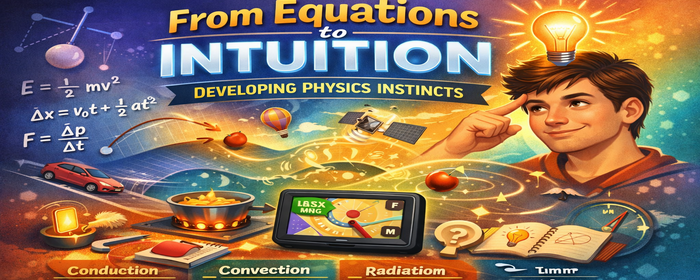
Mathematics teaches students to manipulate symbols within the defined rules. If the method is correct, the right answer follows. Physics borrows the same symbols, but asks a different question first: What does this situation represent in the real world?
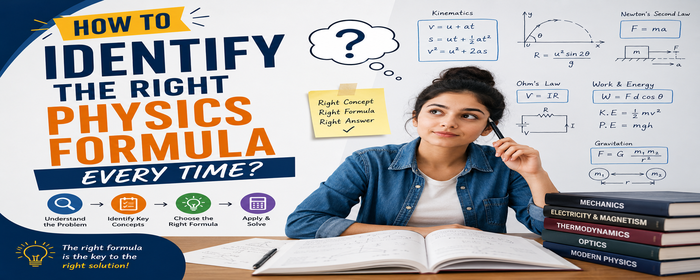
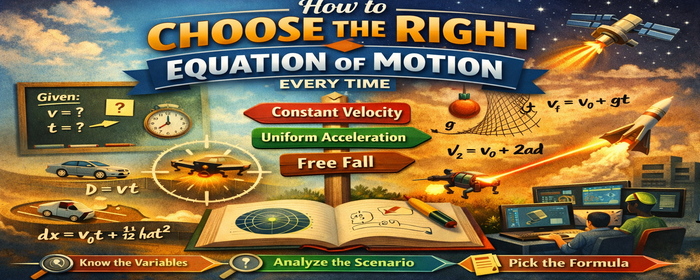
Students strong in maths often rush to quick computation, but when it comes to physics, that instinct often works against them. Before any equation is selected, the problem needs to be accurately interpreted. A student can learn all the formulas for a given topic and yet fail to figure out when to use it. The calculations are correct, yet what is incomplete is the mapping from the situation to the equation.
This is where many capable students stall, not because they lack skill, but because physics does not announce its starting point as clearly as maths does. At higher levels, A level physics tuition in Singapore is especially helpful to bridge this gap.
Accurate Analysis before Calculation
In the examination hall, most students go through physics problems too quickly. They glance at diagrams, underline key phrases, yet fail to comprehend the context of the question. Under the pressure of limited time, strong maths students stick to what feels safe: substituting values and hoping the structure reveals itself.
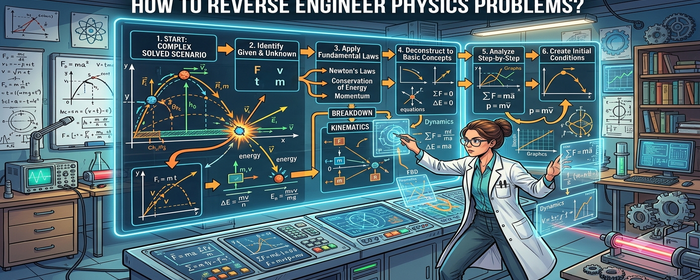
Physics problems tend to reward the student who pauses just before the calculation step. Such questions require a translation from words to physical meaning, and finally to mathematical form. This flow is seldom explicitly taught at school, but is vaguely supposed to grow along with practice, as students themselves try to figure it out. In practice, this skill develops unevenly. Some students pick it up intuitively, while others need to be explicitly exposed to how interpretation shapes the entire solution.
O level physics tuition in Singapore starts to test reasoning instead of recall to effectively bridge this gap. Tutors can highlight the problem, urging students to focus more on the analysis before diving into solving equations.
Conclusion
Physics tuition does not replace school instruction, but it often complements what the classroom cannot always cover. In a school setting, lessons move at a pace designed for the group, which means there is limited time to slow down, revisit assumptions, or pause for deeper questioning.
Physics tuition creates that space by allowing the pace to adjust to the student, correcting misunderstandings as they arise, and making room for questions about why something works without the pressure of holding others back. When physics feels fragmented or uncertain, the best physics tuition offers a more focused way forward.